
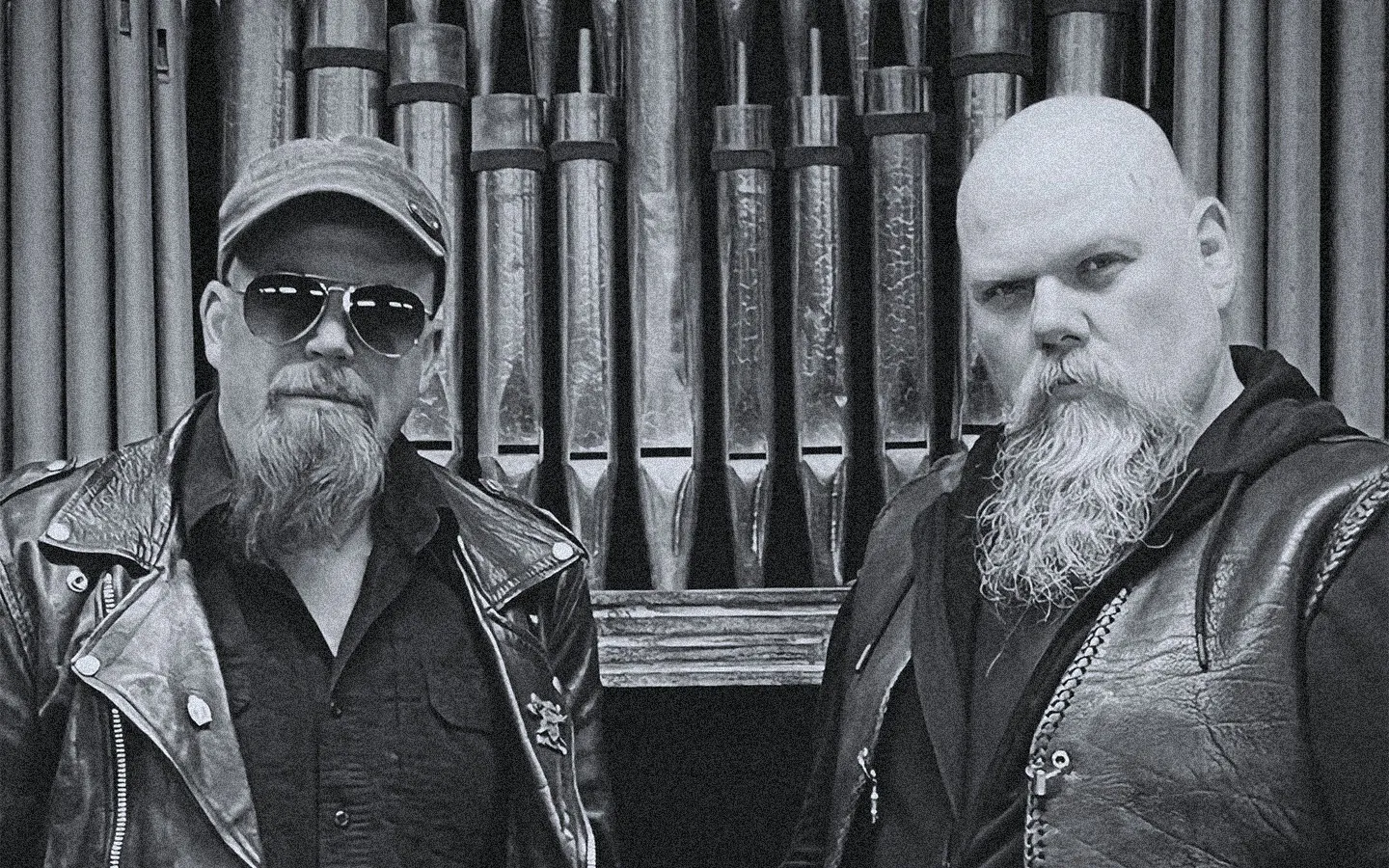
In an era when Norwegian black metal has already been told and retold from a thousand different angles, Mortem return to write a new chapter in their story with Mørketid, a second album that deepens and expands on the path laid out by Ravnsvart. Marius Vold walked us through the genesis of the record, touching on the themes of war, fear and religious oppression running through the lyrics, and revisited some key moments from his past: from the legendary recording session for Slow Death alongside Euronymous and Dead, to the early days of Arcturus and Snorre Ruch's role in shaping the sound of the scene. Here's what he told TrueMetal's readers!
What can Mortem fans expect from your return with Mørketid? How would you describe the album's sound, and what kind of evolution have you gone through compared to Ravnsvart?
I think listeners will recognize the same identity that on Ravnsvart, but they will also notice that Mørketid reaches a little further in every direction. The riffs are more elaborate, the arrangements more ambitious, and the dynamics more pronounced. Lyrically, has not changed. War, fear, death and religious oppression remain the subjects. History has an tendency to repeat itself, so there is no shortage of inspiration, ha ha...
How do Mortem songs take shape? Could you walk us through the creative process, from composition to the actual production of your music at Toproom Studio?
Everything begins with Sverd. He is the composer and has an extraordinary ability to hear complete arrangements long before anyone else does. A riff rarely arrives alone; it usually comes with a vision of where it belongs. When the material reaches the rest of us, the focus shifts from writing to refinement. We will have a short discuss about transitions, tempos, harmonies and stuff until we understad that Sverd has the last word anyway, Ha ha. Hellhammer has a frame to work within. Seideman and I are freer to decide how and what we want to add to the song. Then everything is aproved or mixed by Sverd. Finito
Which themes did you explore and develop in the lyrics of Mørketid?
The lyrical themes on Mørketid continue the path we started on Ravnsvart. War, death, fear and religious oppression are still at the core, but this time the perspective is broader and perhaps more psychological. Some lyrics are rooted in historical events, while others deal with the darker aspects of the human mind—fear, loss of control and the struggle between reason and belief. The title Mørketid is not only about a specific historical period. It also reflects a recurring condition in humanity. Every generation seems convinced that it has moved beyond ignorance, yet we continue repeating many of the same mistakes. That makes the title just as relevant today as it would have been several hundred years ago.
Tell us something about the album's simple yet evocative artwork. What can we expect from the physical format of the record in this digital age?
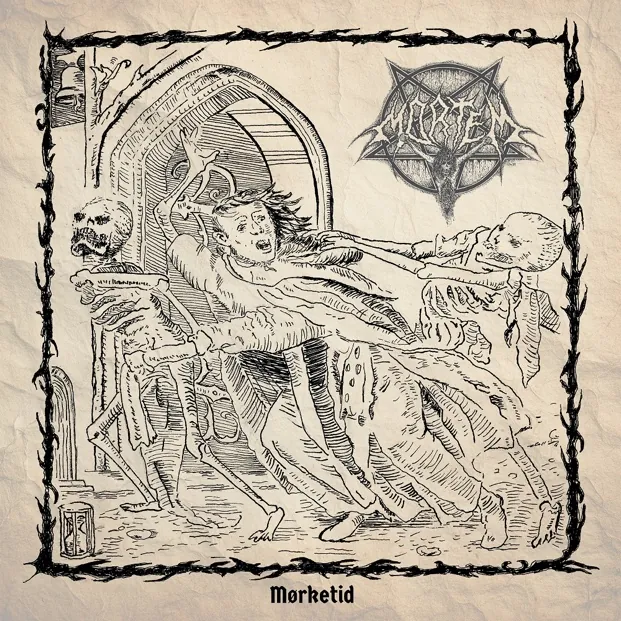
The cover was developed together with Rikke Lundgreen. I wanted a simple image inspired by medieval woodcuts, with symbols connected to death, time and the subconscious. It reflects the atmosphere of the album rather than a particular song. The album is available on both vinyl and CD, in addition to digital formats. Some people still enjoy owning a physical record, others prefer streaming. Both are perfectly fine with me.
What do you remember about the recording sessions for Slow Death, and what can you share about your relationship with Euronymous and Dead, both artistically and on a personal level?
Both Sverd and I had been good friends with both Euronymous and Dead for a couple of years before we recorded Slow Death. Our relationship was entirely personal. So when we asked Euronymous if he could engineer the recording, it was simply a favor he did for friends. The same went for Dead. He was happy to draw the demo cover for us because we knew each other. The recording itself went more or less as expected. We spent about two days in the studio: the first was used to set up the drums and get the sound right, and the second was dedicated to recording. When it came to the vocals, we debated whether to use Fuzz effects on them or keep them completely Natural. We weren't entirely convinced, but Euronymous persuaded us to add some Fuzz. In the studio the vocals sounded incredible, but once everything was copied onto cheap cassette tapes, some of that quality was inevitably lost. One of my favorite stories from those sessions actually happened before we even entered the studio. The recording was originally scheduled for the previous day, but nobody could find Hellhammer. We had to postpone everything by twenty-four hours and spend the entire day searching for him around Oslo, checking all of his usual hangouts. Late that afternoon—or perhaps early in the evening—he finally came staggering towards us. We brought him back to Sverd's place, let him sleep it off, and the next day we went into the studio and recorded Slow Death.
And what about the days when Arcturus recorded 'My Angel'? What kind of atmosphere did you experience in Norway in the early Nineties?
At the time we wanted to record 'My Angel,' none of us had much money. I eventually found a youth studio called Studio S in Strømmen that was partly funded by the local municipality, which made it affordable enough for us to book three nights. If I remember correctly, Emperor also recorded there at a later stage. One funny memory from those sessions is that I think this was where Sverd first learned what became his characteristic "angel choir" keyboard chords. One of the studio engineers played keyboards in a pop band and showed him a few simple chord and techniques. It's amusing to think that Sverd's later style may have started with a few tips from a pop musician. Lol, Just kidding. Looking back at the start of Arcturus, what strikes me most is how small everything actually was and now, today it is an international known band. It was an incredibly creative period. Everyone seemed to be experimenting, borrowing ideas from one another while at the same time trying to find your own sound.
Regarding Thorns' The Thule Tape: what did it mean for you to be part of this project, and what do you think a musician like Snorre has contributed to Norwegian black metal?
I am proud to have been part of that project. I realized Snorre's talent the very first time I heard him play at my home. There was never any doubt in my mind that I was witnessing an exceptional musician. It was obvious that this was someone you wanted to work with. Snorre had an enormous influence on the development of Norwegian black metal. Together, he and Euronymous laid much of the musical foundation that many others would later build upon.
What can we expect from Mortem in the near and distant future, including any live dates?
Mortem are now ready to play live and maybe have some short tours. When it comes to future music it's a bit early to predict it now, we just released the Mørketid album. let's enjoy this for a while.
What are your favorite musical genres and bands outside the metal scene?
I listen to much more than metal. Classical music has always been my favorite, because of its structural sophistication and emotional depth. Some electronic music and even certain forms of folk music can occurs and occasionally pop tunes can find their way into my playlists.
Like right now tonight as I write this interview I'm playing a song I really like, 'Stille vann' by Siri Nilsen. For the good lyrics and emotional depth. Good music is less about genre than about authenticity. I can admire Bach and Bathory for surprisingly similar reasons: both knew exactly what they wanted to express and refused to compromise.
Finally, what message would you like to send to your fans in Italy, and how would you encourage them to buy their copy of Mørketid?
First of all, I would like to thank everyone who has taken the time to read this interview, whether you have followed Mortem for years or have only just discovered us. Italy is one of the countries we have never had the pleasure of playing, so I think it's about time we changed that. If you're curious about what we've been talking about, I hope you'll give Mørketid a listen—or even better, order a copy and support the band. We'd appreciate it... with sugar on top.
https://www.youtube.com/watch?v=qmYCqh75P1U&pp=ygUPbW9ya2V0aWQgbW9ydGVt