
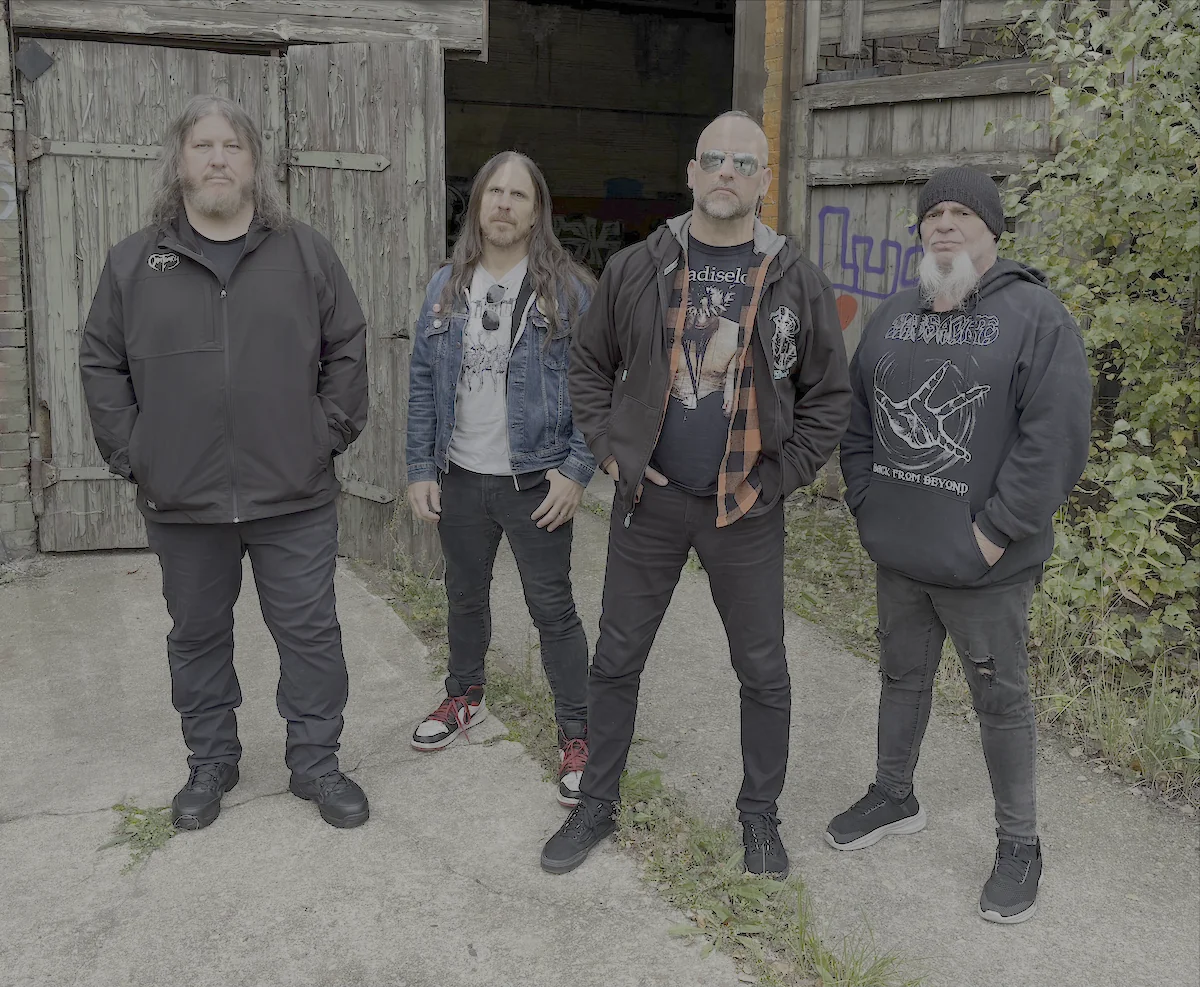
Before Death, there were Mantas: three fifteen-year-olds from Florida who, whether they knew it or not, were about to help write the history of death metal. Today, that forgotten chapter comes back to life thanks to Left to Die: with the album Initium Mortis, the band doesn't simply celebrate a legacy, but digs into the very roots of death metal, restoring dignity to an era too often dismissed as a mere curiosity for collectors. We caught up with Matt Harvey to talk about legendary demo tapes, his relationship with Chuck's memory, and the fine line separating heartfelt homage from nostalgia for its own sake. Here's what he told TrueMetal's readers.
Left To Die started as a live celebration of Leprosy, but it has now evolved into a recording band with Initium Mortis. Looking back, when did you realize that this project had become something more than a tribute to Death's legacy and had developed its own identity?
From the beginning, people were asking us if we were going to record anything, as soon as our first gig was announced, so we knew that it was something people were curious about. Really, once we had a few tours under our belt and it was clear that we had good chemistry and felt like a "real band," it was a question of figuring out the right way to approach it. We all felt that writing new stuff would be a bit daunting as the weight of expectation and comparisons to classics like Leprosy and From Beyond would be impossible to live up to. I got asked about the Gruesome 'Legion Of Doom' cover we did for a bonus track for Twisted Prayers and a light bulb went off - there was a treasure trove of early stuff that Rick was directly involved in that nobody had really done anything with and it seemed like a fun and credible direction for a record.
You mentioned spending a great deal of time digging through the old Mantas and early Death demos and rehearsal tapes. As both a musician and a songwriter, what was the most surprising discovery you made during that research? Did it change your perception of Chuck Schuldiner's early creative evolution in any way?
Not really, because I was already pretty familiar with most of the demos and stuff. I had 666th generation bootlegs of a lot of this stuff since the mid-1990s and always dug it. I did discover a couple of new songs I'd never heard before, though - 'Seizure' and 'Rigor Mortis,' neither of which ended up on the record. And even without the demos, having 'Evil Dead' on Scream Bloody Gore gives you a clear link to the Mantas era. I think it shed some light on the evolution of Chuck's riffing style, because a lot the songs like 'Mantas,' 'Rise of Satan,' and even 'Evil Dead' are very much in the Show No Mercy / Kill 'Em All / Heavy Metal Maniac / Bathory (as in the self-titled album) kind of tradition of the really early "extreme metal" style - post-Venom, pre-death metal, while the riffs in 'Infernal Death,' 'Slaughterhouse,' and a few others are already very recognizable as being death metal riffs.
For many fans, Scream Bloody Gore represents the true beginning of Death, while the Mantas era remains almost unexplored territory. What was the biggest challenge in taking songs originally captured on primitive demo recordings and turning them into fully realized studio tracks without losing the raw spirit that made them so special?
We didn't want to overthink the songs or try to turn them into something they're not. I made sure that I did all the songs in one or two takes, and only added things here and there in the solos that were a bit closer to my approach. The riffs and structures are all executed the same way they were on the demos. I knew the material was gonna take on a different vibe because my vocal approach is based on Chuck's voice and these songs are strongly associated with Kam's vocals - which, don't get me wrong, are some of my favorite vocals of all time, I'm a huge Massacre / Kam Lee fan. I think the key was just to not overthink or overplay the songs and just have fun rocking out playing raw, simplistic early death metal.
Through Gruesome, you've paid tribute to different stages of Death's career, while with Left to Die you're revisiting material written when death metal itself was still taking shape. From both a vocal and guitar perspective, how different is your approach when channeling the Chuck Schuldiner of the Mantas years compared to the Chuck of Leprosy or Spiritual Healing?
The Mantas stuff definitely feels like I get to cut loose and feels very natural for me. It's a great sweet spot that combines elements from most of my favorite bands, Death, Venom, Possessed, and Hellhammer / Celtic Frost, and it's not terribly complicated, so it feels like just jamming for fun. The Spiritual Healing era and onward is a little more exacting and there's definitely parts where you have to really be thinking to pull them off convincingly - or at least I do. Really meticulous stuff has never come super naturally to me as a player, so I have to kind of come out of a more physical primal place and into a more measured, deliberate thing, which can be tricky as the material on Twisted Prayers and Silent Echoes often goes between those two vibes multiple times in a single song!
Rick Rozz's contribution to the earliest Death sound has often been overshadowed by later chapters of the band's history. Working alongside him must have offered you a unique perspective. Did collaborating with Rick reveal details about those formative years that no documentary, interview or bootleg tape could ever convey?
There was nothing revelatory there, as the history of Death has now been discussed, endlessly, but there were a lot of cool little insights and stories about writing the songs with Chuck and Kam that just really made me smile and think back on what it was like to be 15 or 16 and just totally obsessed with trying to play the heaviest, most intense metal and that being all you really care about. Knowing that some of my favorite songs were just written by goofy kids hopped up on metal and horror movies fills me with a real feeling of joy and nostalgia. Putting together the early Exhumed stuff really wasn't so different, just sitting around all summer with your small group of weird friends, listening to the heaviest music we could find and watching the goriest movies we could get our hands on and then trying to channel all that into your music, with little skill, shitty equipment and all the weird anxieties that accompany being a teenager - it's a very specific set of memories tied to the 80s and 90s and the rise of death metal and more extreme music in general and there's something magical and bittersweet there that really resonates with me emotionally and kind of touches my heart.
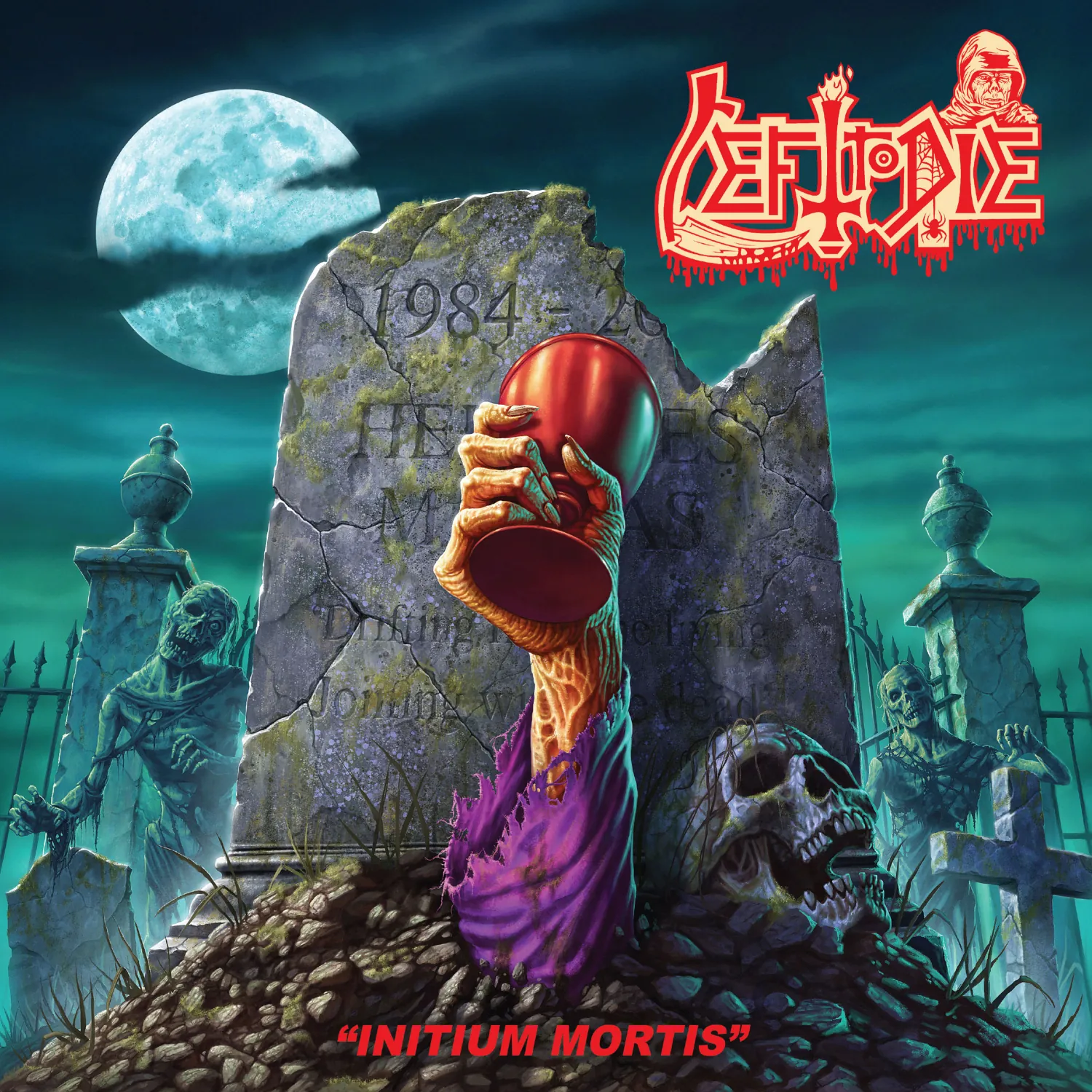
Initium Mortis features a warm, organic production that feels faithful to the spirit of the mid-'80s without sounding dated. How important was it to find the right balance between authenticity and modern recording standards, and how much time did you spend shaping that sonic identity?
We didn't want to get obsessed with analog gear or start fetishizing certain amps or whatever, we just wanted to get a really stripped-down, straightforward sound that would be big and powerful and let the music do the talking. I really didn't spend too much time at all on the tones - I used an Engl Powerball for one side of rhythm guitars and a Peavey 6505+ for the other side - keeping in mind Rick's approach to tone, the 6505+ side is a bit more scooped and relies more on the presence knob - he has a certain thing that he's always going for that I call the "Rick Rozz breaking glass" tone, and my approach is closer to Chuck's - something more like a souped-up Marshall / Tube Screamer thing. I just didn't overthink it, plugged in and let it rip. We told Matt LaPlant to just make it sound big and powerful and not worry too much about cleaning up the performances and I think it worked out pretty well.
Today's death metal audience spans multiple generations, and many younger fans never experienced the tape-trading culture that helped spread those early recordings around the world. Do you see Initium Mortis as a way of preserving an important piece of extreme metal history while introducing that forgotten chapter to a new audience?
We hope that's what the record will accomplish. So many Death fans have never heard most of these songs, and I think they're a cool insight into the history and evolution of not just Death and Mantas, but the death metal genre writ large as well.
Chuck Schuldiner was known for constantly pushing forward rather than looking back. If he could somehow listen to Initium Mortis today, what do you think his reaction would be? Would he appreciate these songs as an important historical document, or would he still see them simply as stepping stones on his musical journey?
It's tough to say because people's perspectives change over time, and Chuck died just so fucking young. I know that I'm much more nostalgic now than I was in my early 30s, so who knows how he might think if he had lived another 20 years. I will say that the early Death stuff feels more collaborative to me than the later records, where Chuck's vision clearly is front and center and you have these monster players working around that to push it forward. I'm sure he'd chuckle at some of the Satanic and gory lyrics, which I do too, and I think he might be embarrassed at how crude some of it is, but I have to hope he'd smile and have some fond memories of bashing out these tunes in his folks' garage in Altamonte Springs.
Projects celebrating legendary bands can sometimes walk a fine line between heartfelt homage and nostalgia. Left to Die feels driven by genuine passion rather than mere celebration. How conscious have you been of maintaining that balance, especially knowing how knowledgeable and protective Death fans are about the band's legacy?
I love these songs and I wanted to put them forward the way that I would want to hear them as a fan, and of course that's highly subjective. I know how passionate people are about Death, and I share that, so I appreciate even the negative comments on YouTube or whatever, just because they're coming from a place of really caring about this material and wanting to protect Chuck's legacy in his absence. These are really good feelings coming from a place that is really important, so I really value them. Of course, I always hope that 100% of people will dig what we're doing, but that's just not realistic. I feel a lot of affection and respect for this material and as much as I have a great time screaming my head off and growling "I am the guardian of mayhem and hell". I hold this material in very high regard and I tried to honor it the best way I know how.
Now that Initium Mortis has brought these long-overlooked songs back to life, where do you see Left To Die heading next? Is there still more hidden material from the Mantas/early Death archives worth exploring, or could you eventually envision this lineup writing completely original music together?
We've never had a master plan beyond playing some gigs, so thinking about "next steps" or whatever feels very forced. We just kind of take things as they come and do what makes sense in each instance and what feels honest and fun. That's about as much thought as we've ever put into planning our career, and I think it works best that way. If we come up with material that we feel strongly about, maybe we'll record it, or if I'm dying to re-record 'Reign of Terror' or 'Skill To Kill' maybe we'll do that. Who knows? We're just stoked to have the record out and bring tracks like 'Slaughterhouse' to a wider audience and play some of this stuff live.
Finally, Matt, what message would you like to send to the Italian Metal community and to everyone who will be discovering Left to Die through Initium Mortis? Any final words or greetings for your current and future Italian fans?
I'd just say thanks for checking the band out and accompanying us on our journey through the grimier, grittier days of early Death and death metal. Chuck lives!!
https://youtu.be/z6GotdZxoQ4?si=i2JW4HwnXSyNfg5V